Generational Change Tests ANC ZANU PF Ties, Driving a Renewed Ideological Alliance
If the ANC and ZANU PF can turn liberation solidarity into regional industrialisation, economic reciprocity and greater African strategic autonomy, generational change may strengthen rather than weaken their alliance.
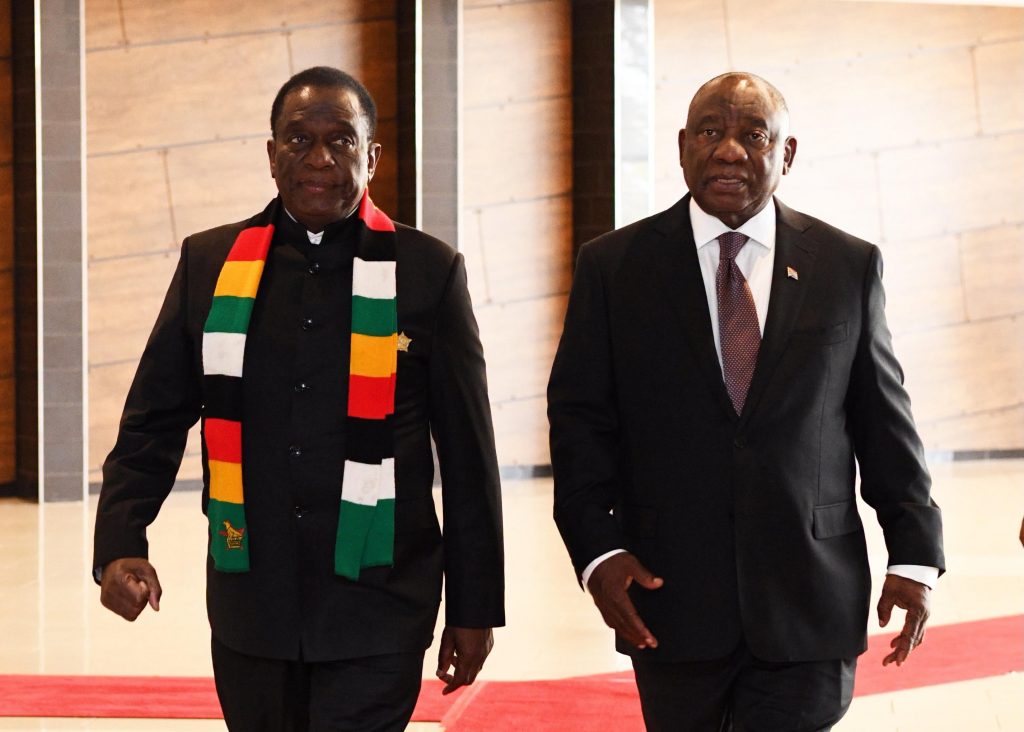
The Fourth South Africa Zimbabwe Bi National Commission was presented as a reaffirmation of a relationship forged in struggle. Presidents Cyril Ramaphosa and President Emmerson Mnangagwa spoke warmly of friendship, solidarity, shared history and the responsibilities that come with being neighbours. Yet beneath the diplomatic language was a more consequential question: can the political and ideological ties between the African National Congress and ZANU PF remain meaningful as the generation that experienced colonialism, the liberation struggle and apartheid gradually gives way to leaders and citizens whose relationship with that history is increasingly inherited rather than lived?
That question is particularly relevant because the relationship between South Africa and Zimbabwe has never been purely transactional. The two countries share a long history of political, economic and social interdependence, while the ANC and ZANU PF have historically understood their respective liberation struggles as part of a broader Southern African struggle against colonialism and apartheid. Zimbabwe’s independence in 1980 and South Africa’s democratic transition in 1994 transformed that relationship from one between liberation movements operating in a hostile political environment into one between governments responsible for managing borders, economies and regional institutions. The political generation that carried the relationship through those transitions is now giving way to a generation that inherited the liberation state rather than fought to establish it.
That transition creates a difficult political reality for both movements. Liberation history remains important, particularly in the foreign policy of both countries, but historical legitimacy cannot indefinitely substitute for contemporary delivery. Younger South Africans and Zimbabweans are more likely to judge governments by employment, economic opportunity, public services, mobility, education, governance and whether the state can improve their material circumstances. If the ANC and ZANU PF want their historical relationship to remain politically relevant, they must demonstrate how the principles of sovereignty, solidarity and African unity can address the problems facing the present generation.
The Fourth BNC provides an interesting indication of how that transition might take place. Rather than relying exclusively on political symbolism, the two governments signed memoranda covering cooperation between Zimbabwe’s Foreign Service Institute and South Africa’s Diplomatic Academy, correctional services, women empowerment and gender equality, agriculture, and arts, culture and heritage. The range is significant because it begins to institutionalise the relationship across diplomacy, security, social policy, economic cooperation and cultural memory. The diplomatic academy agreement can help develop a new generation of officials who understand the relationship beyond the personal bonds of liberation era politics. Cooperation in correctional services complements the broader security relationship, while the gender agreement places women’s empowerment within the formal bilateral agenda. Agriculture provides an economic platform, while arts, culture and heritage reinforce the historical dimension of the relationship.
This institutional dimension may ultimately matter more than the presidential rhetoric. Political relationships based heavily on personal history are vulnerable to generational change, whereas relationships embedded in ministries, diplomatic institutions, businesses and civil society can survive changes in leadership. The challenge for South Africa and Zimbabwe is therefore to turn a historically personal relationship into a durable state to state partnership. In that sense, the BNC is not simply preserving an old alliance; it is attempting to give it a structure capable of surviving the generation that created it.
Ramaphosa’s closing remarks reflected this institutional and economic orientation. He described Zimbabwe as a strategic partner and one of South Africa’s largest trading partners, while identifying agriculture and agro processing, energy, mining, transport, medicines and vaccines, water, tourism, finance and the digital economy as areas of opportunity. His repeated emphasis on implementation was particularly important. The political relationship already exists; the question is whether the agreements and decisions reached through the BNC can produce investment, employment, infrastructure and improved economic opportunities. For South Africa, this is not simply a matter of diplomatic goodwill. A stable and economically viable Zimbabwe is directly connected to South Africa’s own interests in regional trade, border management, security and economic integration.
Mnangagwa’s approach was more explicitly political, but it was also highly focused on reciprocity. He placed the BNC within the history of the liberation struggle and repeatedly invoked solidarity, common values and the shared experience of colonialism and apartheid. From there, he moved toward specific economic expectations, including cross border manufacturing value chains, infrastructure development, agriculture and mineral beneficiation. His references to the Third Limpopo Bridge and the operationalisation of the one stop border post were especially significant because they connected political cooperation to the physical infrastructure required for deeper regional integration.
Mnangagwa also acknowledged that Zimbabwe has obligations within the relationship. His commitment to remove tariff and non tariff barriers and address challenges faced by South African businesses operating in Zimbabwe was an implicit recognition that deeper integration cannot be built by demanding concessions from South Africa alone. The declaration that Zimbabwe is “open for business” was therefore more than a familiar political slogan. It was an assurance that Harare wants South African investment and understands that attracting it requires a more predictable and accessible investment environment.
At the same time, Mnangagwa made clear that Zimbabwe expects political reciprocity. His gratitude for South Africa’s support for Zimbabwe’s election to the United Nations Security Council and for Pretoria’s advocacy against sanctions placed the bilateral relationship within a wider diplomatic framework. His appeal for South Africa to develop its allocated space at the Museum of African Liberation similarly connected contemporary diplomacy with the politics of historical memory. The liberation struggle remains part of how Harare understands its international relationships, particularly questions of sovereignty, sanctions and African solidarity.
This is where the speeches reveal an important difference in emphasis. Ramaphosa’s approach was predominantly about consolidating and operationalising the bilateral relationship, while Mnangagwa used the same relationship to articulate Zimbabwe’s economic and diplomatic interests. Ramaphosa’s emphasis was on investment, trade, implementation, border management and regional industrialisation. Mnangagwa placed those issues alongside the liberation struggle, sanctions, Zimbabwe’s international role and the preservation of liberation history. Their positions are not incompatible, but they reflect different priorities within the same partnership.
The economic asymmetry between the two countries makes this distinction especially important. South Africa has a much larger and more diversified economy and remains a major trading partner, source of investment and gateway to international markets for Zimbabwe. Zimbabwe, however, possesses significant mineral resources, agricultural potential and geographical importance to the regional economy. The relationship is therefore one of interdependence, but it is not an equal interdependence. South Africa has greater economic leverage, while Zimbabwe has resources and regional strategic importance that give it leverage of a different kind.
Mnangagwa’s statement that when South Africa thrives Zimbabwe thrives too, and vice versa, can therefore be read as an attempt to frame this asymmetry in terms of mutual interest rather than dependency. Zimbabwe wants deeper economic integration, but it also wants to participate in the production and value creation that integration makes possible. This is why the emphasis on cross border manufacturing and mineral beneficiation matters. The objective should not be for Zimbabwe simply to export more raw materials to South Africa or for South African companies simply to expand their existing market share. A more ambitious model would involve the two economies developing regional production chains in which Zimbabwean resources and agricultural capacity are combined with South African capital, industrial capacity, technology and logistics.
That approach is particularly relevant to the wider African industrialisation agenda. Africa has long been disadvantaged by an economic structure in which raw materials are exported and finished products are imported, often with limited value added within African economies. Mineral beneficiation and agricultural processing offer a way to capture more value within the region. South Africa and Zimbabwe cannot solve this structural problem on their own, but their proximity and economic complementarity make them well positioned to experiment with a more integrated model. If successful, such cooperation would give practical substance to the broader principles of AfCFTA and SADC integration.
The border remains the most difficult contradiction in that vision. Ramaphosa’s reference to the seamless movement of people and goods, combined with his emphasis on safety and a well managed border, reflected the competing pressures facing South Africa. Regional economic integration requires mobility, but South Africa is also under significant domestic political pressure over undocumented migration, border security, employment and access to public services. Zimbabwe, meanwhile, has a large population whose economic and family networks extend across the Limpopo. Migration is therefore not simply an immigration policy issue. It is an established feature of the regional economy.
The diplomatic language used at the BNC appears to have been deliberately calibrated to avoid turning that difficult issue into a public confrontation. Ramaphosa acknowledged the need for better management and security without framing Zimbabwean migrants as a threat, while Mnangagwa did not make migration the centre of his remarks. That restraint was politically sensible. A bilateral commission intended to deepen economic cooperation would have been undermined if the two governments had allowed migration tensions to dominate the public narrative. Yet avoiding confrontation does not resolve the underlying issue. The long term answer requires better documentation, coordinated border management, lawful labour mobility and regional economic policies that expand opportunities on both sides of the border.
Ramaphosa’s assertion that the two countries are “one people” is therefore more than a gesture of diplomatic warmth. It reflects the social reality that the political border between South Africa and Zimbabwe does not erase longstanding cultural, familial and economic connections. At the same time, the statement creates a responsibility for both governments to consider what regional belonging should mean in practical terms. Pan Africanism cannot reasonably demand unrestricted movement without regard for state capacity and national regulation, but neither can it accept a politics in which migration is reduced to a security problem. A realistic regional approach must accommodate both sovereignty and interdependence.
The cultural dimension of the BNC is equally important. Mnangagwa’s appeal for South Africa to develop its space at the Museum of African Liberation and the signing of the arts, culture and heritage agreement indicate that both governments understand the continuing political value of historical memory. The liberation struggle remains a source of legitimacy for the ANC and ZANU PF, but its meaning is changing as the generation that lived through those struggles becomes smaller. Preserving that history therefore matters, but it must be connected to contemporary questions about economic sovereignty, political agency and regional integration. Otherwise, liberation memory risks becoming ceremonial rather than politically productive.
The agreement between the two diplomatic training institutions may be particularly useful in this respect. The next generation of South African and Zimbabwean diplomats will operate in a very different international environment from the one that shaped the liberation generation. They will have to navigate AfCFTA, critical mineral competition, climate diplomacy, migration, digital transformation, changing global power relations, BRICS and the reform of international institutions. Teaching them the history of ANC and ZANU PF solidarity is important, but it is not enough. They must also understand how that history can inform contemporary African foreign policy.
This is where the ideological renewal of the relationship should begin. The future of the ANC and ZANU PF alliance cannot rest solely on repeating the language of comradeship. It needs a contemporary political and economic proposition. That proposition could be built around African industrialisation, regional value chains, infrastructure integration, economic sovereignty, coordinated diplomacy and stronger people to people relations. In other words, the next generation does not need a weaker commitment to Pan Africanism. It needs a more practical one.
There is, however, a reason to remain cautious. Both presidents stressed implementation precisely because bilateral agreements can remain declarations rather than instruments of change. The real measure of the Fourth BNC will not be the number of memoranda signed or the warmth of the presidential speeches. It will be whether projects materialise, whether businesses encounter fewer barriers, whether infrastructure is delivered, whether agricultural cooperation creates value, whether mineral beneficiation advances, whether security institutions cooperate effectively and whether the commitments on gender and diplomacy result in measurable programmes.
This is ultimately the test of the relationship itself. The ANC and ZANU PF cannot assume that their historical legitimacy will automatically command the loyalty of younger generations. Those generations are asking whether liberation has produced meaningful economic freedom and whether African states have sufficient collective power to determine their place in the global economy. They are less interested in political nostalgia than in whether regional cooperation can create jobs, markets, infrastructure and opportunity.
That does not make the liberation struggle irrelevant. It makes its unfinished economic dimension more important.
The generation that fought for political independence confronted colonial rule and apartheid. The generation that followed inherited sovereign states but remains confronted by economic structures that continue to limit African agency. The challenge now is to convert political independence into greater economic capacity, and to convert regional solidarity into practical power.
The Fourth BNC offers a possible framework for doing that. Its significance lies not in the fact that South Africa and Zimbabwe still describe each other as brothers, but in whether that political relationship can be translated into institutions capable of surviving generational change and economic cooperation capable of producing mutual benefit.
The ANC and ZANU PF therefore face a choice. They can preserve their relationship largely as an inheritance from the liberation era, sustained by commemorations, political symbolism and familiar rhetoric. Or they can renew it around the realities facing contemporary Africa: industrialisation, regional markets, economic sovereignty, migration, infrastructure, strategic minerals, technological development and collective diplomatic influence.
The second path is more difficult, but it is also more consistent with the original logic of Pan Africanism.
The liberation generation sought political freedom from external domination. The next generation must determine what economic and strategic freedom looks like in a global system where African resources remain essential to the world’s future but African states still struggle to capture sufficient value from them.
That is why the generational transition confronting the ANC and ZANU PF should not necessarily be understood as a threat to their historical relationship. It can be the pressure that forces the relationship to evolve. The Fourth BNC has reaffirmed the history. The more difficult task is to give that history a future.