Prof Emeritus Mandi Rukuni Calls for Nationally Owned Implementation and Investment in the CAADP Kampala Era
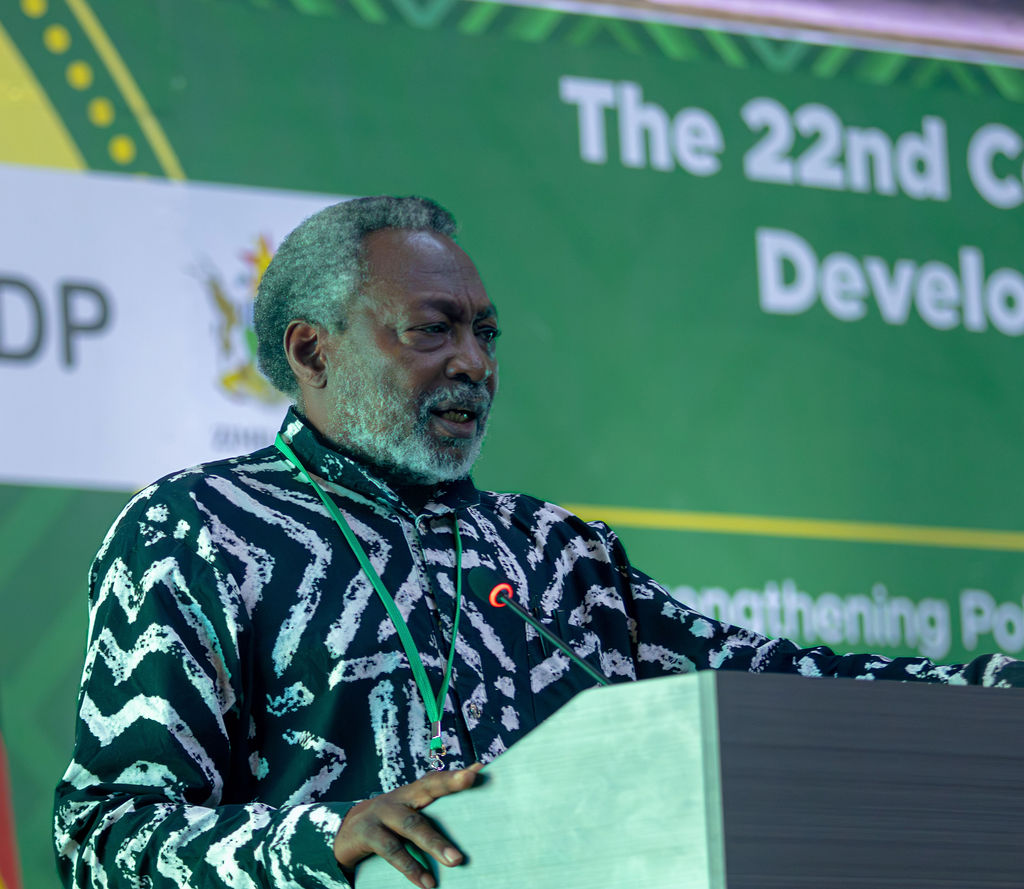
Professor Emeritus Mandivamba Rukuni at the 2nd CAADP Partnership Platform | Harare, Zimbabwe 15/09/2026
Prof Emeritus Mandi Rukuni calls for a decisive shift towards rural industrialisation, nationally owned implementation and stronger public–private financing partnerships.
At the 22nd CAADP Partnership Platform, Prof Emeritus Mandi Rukuni reflected on the achievements and challenges of CAADP during the Maputo and Malabo eras, placing the continental agricultural agenda within the wider forces shaping Africa’s economic transformation.
His central argument was that CAADP must be understood not simply as an agricultural development framework, but as a vehicle for restructuring African economies.
“CAADP is supposed to be the vehicle for social and economic transformation of the continent. It is not supposed to be the end of all this stuff that we talked about. It is supposed to transform the entire economy.”
Beyond sectoral agriculture: The case for rural industrialisation
Prof Emeritus Rukuni argued that Africa’s development challenge is fundamentally structural. Agricultural transformation, in his view, must create the conditions for industrialisation by increasing productivity, reducing production costs and connecting rural producers to manufacturing and value addition.
This requires moving beyond an approach in which smallholder farmers primarily produce raw materials for fragmented markets. Instead, CAADP implementation should help establish stronger linkages between:
Agricultural production → Aggregation → Processing → Manufacturing → Markets → Rural incomes
The objective is to ensure that agricultural growth generates broader economic opportunities, including employment, enterprise development and increased purchasing power in rural communities.
“Rural industrialisation is not an add-on. It’s part of the overall restructuring of the entire industrial process.”
Strengthening private-sector participation through viable value chains
For the private sector to become a stronger implementation partner, Prof Emeritus Rukuni argued that CAADP must create commercially viable opportunities rather than rely primarily on participation in policy discussions.
This means developing value chains in which private investment can support:
- Agricultural production and aggregation.
- Processing and manufacturing.
- Logistics and market access.
- Local consumption and downstream value addition.
- The development of competitive African food products.
The presentation emphasised that manufacturers can provide more reliable markets for smallholder farmers while generating value further along the production chain. In this model, agricultural transformation and industrial development reinforce one another.
Bringing ministries of finance and financing institutions into the implementation architecture
A major implication of this approach is that agricultural transformation cannot remain the responsibility of agriculture ministries alone.
Ministries of finance, development finance institutions and private investors must be integrated into the implementation process from the outset.
This requires:
- Aligning national budgets with agricultural–industrial transformation. Public expenditure should support the infrastructure, water, skills and productive systems needed to increase rural productivity.
- Embedding CAADP priorities in national development plans. Agricultural transformation should be connected to broader macroeconomic and industrial policy.
- Developing investment-ready programmes. National priorities must be translated into credible projects and value chains capable of attracting development finance institutions, commercial lenders and private capital.
- Linking financing to productive outcomes. Financing should support value addition, market development and structural transformation, rather than become an end in itself.
The presentation therefore points towards a financing ecosystem in which public investment creates the enabling conditions, development finance institutions help de-risk and scale productive opportunities, and private capital participates in commercially viable enterprises.
A more demand-driven role for AU and NEPAD
Prof Emeritus Rukuni also called for a stronger demand-driven approach to continental implementation support.
Rather than assuming that programmes designed at continental level will automatically reflect national priorities, he proposed that AU and NEPAD should support what countries are already implementing through their national development processes and treasuries.
“Whatever is in existence, funded by the national treasury, whatever has been approved by the country’s national development process and is funded by the national treasury, that should be what the African Union and NEPAD go out there to support.”
This approach would place greater emphasis on practical problem-solving, technical assistance and implementation support requested by countries themselves.
It also recognises that many innovative initiatives may already be underway nationally but remain disconnected from continental frameworks.
Measuring transformation, not simply compliance
Another important intervention concerned how CAADP measures progress.
Prof Emeritus Rukuni questioned the emphasis on extensive compliance reporting and argued that monitoring should focus more directly on whether agricultural strategies are producing structural transformation.
He proposed greater attention to indicators such as:
- Increased agricultural productivity.
- Reduced production costs.
- Higher rural incomes.
- Stronger agricultural–industrial linkages.
- Expanded local processing and value addition.
- Progress in regional integration.
- The effectiveness of national strategies and investments.
Routine data collection, he suggested, should increasingly be integrated into national administrative systems, allowing CAADP monitoring to concentrate on strategic outcomes rather than placing unnecessary reporting burdens on countries.
Climate resilience as an opportunity for innovation
The presentation also connected agricultural transformation to Africa’s changing environmental conditions.
Prof Emeritus Rukuni called for renewed investment in research, breeding and agronomy around crops suited to African environments, including millet, pulses and vegetables.
Rather than viewing drought and El Niño only as threats, he argued that these pressures should reinforce the case for developing resilient African production systems, strengthening local food processing and creating new markets for African agricultural products.
This perspective places climate resilience within a broader economic agenda: building productive, competitive and locally anchored food systems capable of supporting both food security and industrial development.
What the Kampala era must deliver
The presentation offers a clear implementation proposition: CAADP’s next phase must connect agricultural policy to the wider architecture of economic transformation.
That means moving from commitments to investment, from fragmented production to integrated value chains, and from sectoral programmes to stronger links between agriculture, industry, finance and markets.
For ministries of finance, financing institutions and the private sector, the implication is direct: agricultural transformation must be treated as an economic investment opportunity and a national development priority.
For AU and NEPAD, the task is to support nationally owned implementation, respond to practical country needs and help scale initiatives that are already demonstrating potential.
And for CAADP itself, progress must increasingly be judged by whether it is helping to create more productive farmers, stronger rural economies, competitive industries and more integrated African markets.
Watch Livestream: https://www.facebook.com/share/v/1HVNK22bpR/