Germany Reaffirms Support for African-Led CAADP Implementation, Highlights Technical Expertise and Investment Opportunities
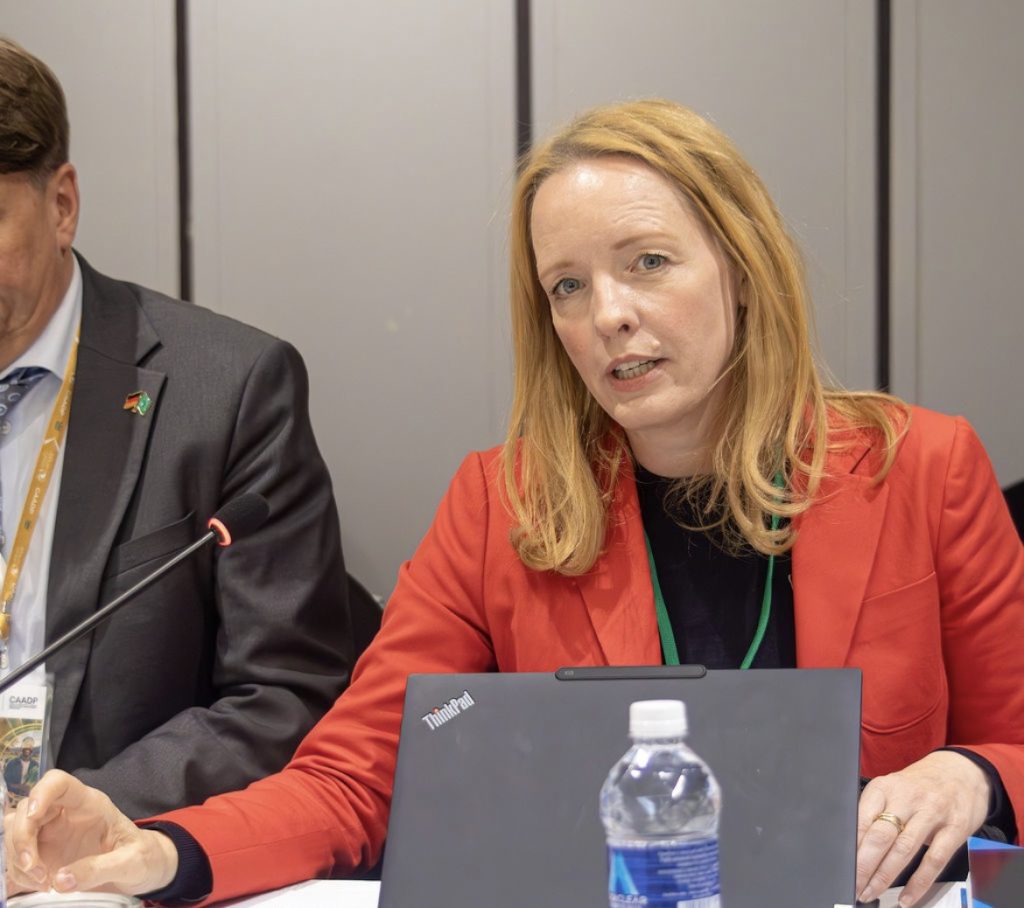
Silke Stallkamp, Counsellor for Food and Agriculture at the German Embassy to the African Union and GIZ
Germany has reaffirmed its commitment to supporting the implementation and domestication of the Comprehensive Africa Agriculture Development Programme (CAADP), emphasising that its partnership with Africa must remain grounded in African leadership and ownership.
Speaking to the press at the opening of the 22nd CAADP Partnership Platform in Zimbabwe, Silke Stallkamp, Counsellor for Food and Agriculture at the German Embassy to the African Union and GIZ, said Germany was among the major bilateral partners supporting the continental agricultural development framework.
“Germany is among the major supporters, bilateral donors, to support the implementation and domestication of CAADP,” Stallkamp said, adding that Germany was committed to remaining a partner in what she described as “a genuinely African-led and African-owned process.”
She stressed that the role of development partners was to listen to Africa’s priorities and respond where support was requested.
“Our role as partners, as Germany, our role is to listen,” she said. “And if requested, we are happy to bring in our resources and our expertise.”
Stallkamp outlined several areas through which Germany contributes to agricultural development across the continent, including technical cooperation, research, policy dialogue and private-sector engagement.
She highlighted the role of the Deutsche Gesellschaft für Internationale Zusammenarbeit (GIZ), Germany’s implementing agency, in providing technical expertise and supporting agricultural development programmes.
She also pointed to the Agricultural Policy Dialogue between the African Union and Germany, describing it as a flagship programme that has facilitated engagement between the two sides for several years and would continue to receive German support.
Beyond technical cooperation, Stallkamp underscored the importance of research and innovation, noting that Germany’s research institutions and scientists could contribute expertise to Africa’s agricultural transformation agenda.
She further called attention to the potential for stronger business and investment partnerships between Germany and Africa, particularly in the agri-food sector.
“Investment is so important,” she said, referring to foreign direct investment, local investment and trade. She added that Germany was interested in drawing on its established agri-food business networks to raise awareness of opportunities across Africa.
According to Stallkamp, stronger engagement with German businesses could support mutually beneficial import and export opportunities, strengthen trade flows in both directions and contribute to agricultural development.
“We would also like to draw upon our very well-established German agri-food business networks to draw their attention to Africa, to the business opportunities here, for the benefit of both sides,” she said.
Her remarks positioned Germany’s support within a broader partnership approach that combines technical expertise, policy dialogue, research and private-sector engagement, while maintaining African ownership of CAADP implementation.
The 22nd CAADP Partnership Platform brings together African governments, development partners, institutions and other stakeholders to assess progress, strengthen implementation and advance Africa’s agricultural transformation and food security objectives.