PAP President Boutbig Pushes for Stronger Institutional Cooperation on Africa’s Peace and Security
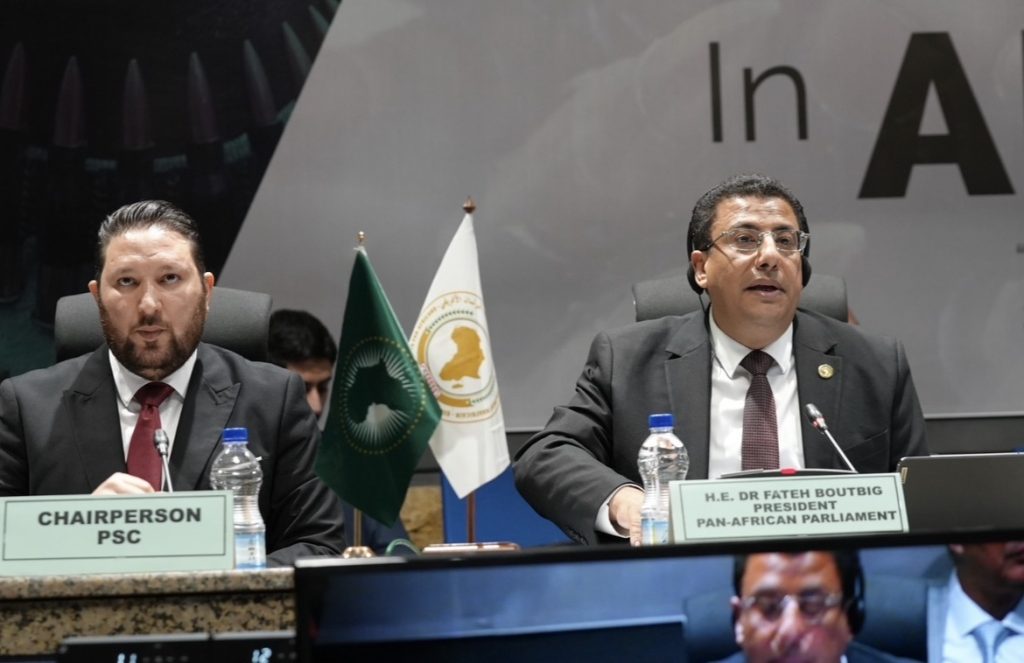
PAP President H.E. Dr. Fateh Boutbig, PSC Chairperson for August H.E. Ambassador Mohamed Khaled
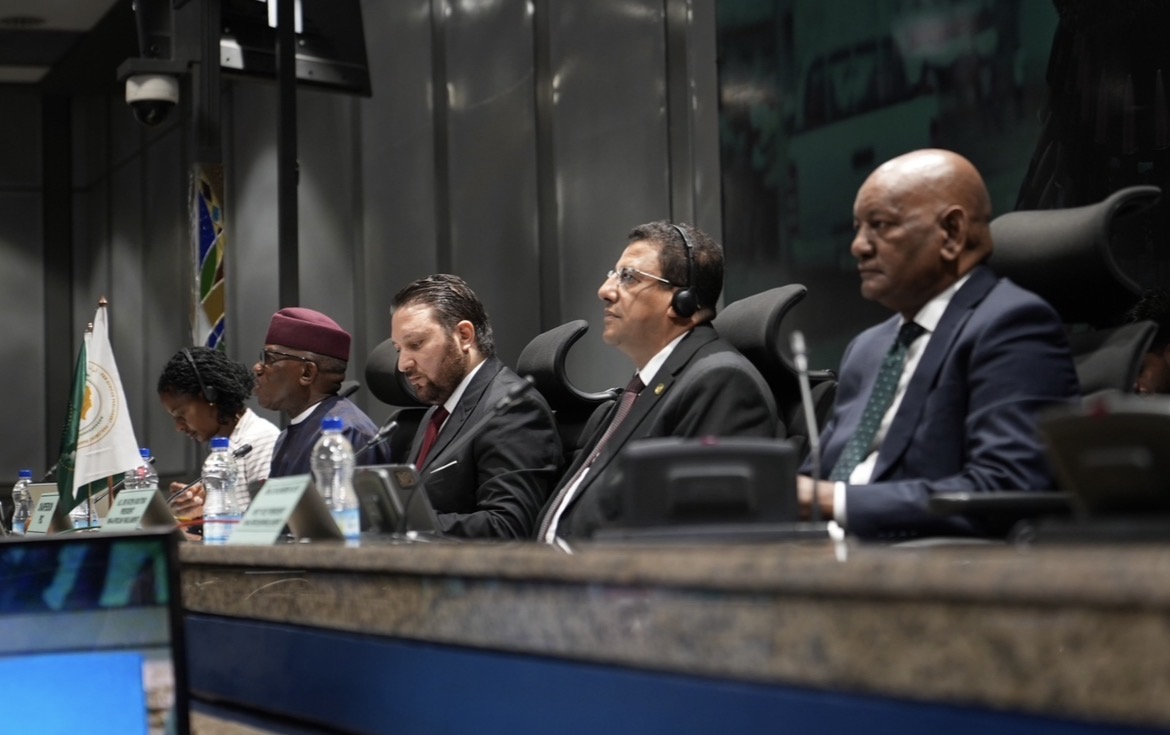
President of the Pan-African Parliament (PAP), H.E. Dr. Fateh Boutbig, has called for a stronger, more structured and institutionalised partnership between the African Union Peace and Security Council (PSC) and the Pan-African Parliament (PAP), urging the two organs to move beyond consultation towards coordinated action, prevention and effective implementation in addressing Africa’s evolving peace and security challenges.
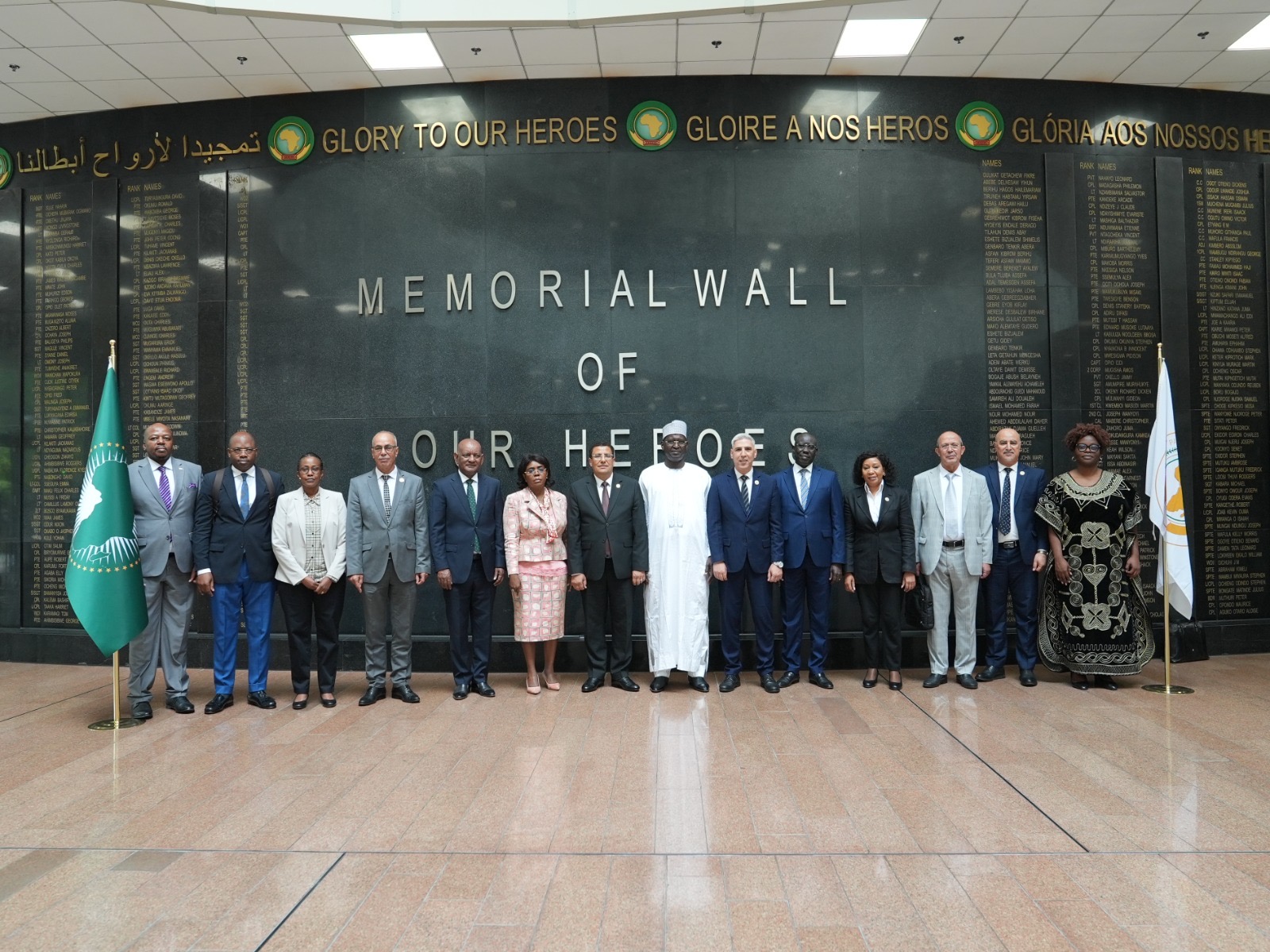
Addressing the 2026 Joint Consultative Meeting between the PSC and PAP in Addis Ababa on 19 August 2026, Dr. Boutbig underscored the complementary mandates of the two institutions within the African Union architecture. He said closer cooperation between the Council’s continental peace and security mandate and PAP’s parliamentary and people-centred legitimacy was essential to ensuring that Africa’s peace and security responses remained both institutionally coordinated and connected to the realities and aspirations of African peoples.
“The challenges facing Africa today confirm that the building of peace can no longer be the responsibility of a single organ or institution. Rather, it is a shared continental responsibility that requires complementarity of roles and concerted efforts.”
The President said the PAP’s contribution to the African Peace and Security Architecture (APSA) lies particularly in providing the parliamentary and people-centred dimension to continental peace and security efforts.
Peace and security as a shared continental responsibility
Dr. Boutbig stressed that Africa’s peace and security agenda cannot be effectively addressed through institutional silos. While recognising the PSC’s central mandate within APSA, he underscored the need for complementary action by AU institutions.
“This role requires joint action among all institutions of the African Union,” he said, emphasising that closer institutional cooperation is essential to addressing the continent’s evolving security challenges.
He noted that the convergence of institutional mandates should be directed towards a common objective: an Africa capable of safeguarding its peace, security and stability while protecting the future of its peoples.
PAP as the parliamentary and people-centred dimension
A central theme of the address was the distinctive role of the PAP as a representative institution connecting continental policy with national and community realities.
Dr. Boutbig observed that PAP Members retain strong links with their national parliaments and communities, positioning the Parliament to act as a bridge between continental decision-making and citizens.
“The Pan-African Parliament brings to this architecture an indispensable dimension: the parliamentary dimension and the popular dimension.”
He argued that this representative character enables the Parliament to bring the aspirations and experiences of African citizens into continental policy discussions, while helping connect institutions of the African Union with realities on the ground.
Preventive diplomacy and early action
Dr. Boutbig further identified preventive diplomacy as a key area in which the Parliament can complement the work of the PSC.
He highlighted the Parliament’s potential contribution to opening channels of dialogue, building confidence, bringing divergent positions closer together, supporting mediation and reconciliation, contributing to early warning, and accompanying States and communities during periods of political transition and crisis.
The emphasis on prevention reflects a broader shift from responding to crises after they have escalated towards identifying and addressing tensions before they develop into violent conflict.
Bridging continental decisions and national implementation
The President also highlighted the PAP’s legislative and oversight functions as an important mechanism for closing the gap between continental commitments and implementation at national level.
He said the Parliament can help translate AU legislation, decisions and policy choices into national legislative frameworks, while mobilising national parliaments to support ratification and harmonisation with domestic legislation.
This, he noted, must be accompanied by public awareness and political ownership, as well as parliamentary monitoring of implementation and outcomes.
The objective, he argued, is to ensure that decisions taken at continental level are translated into tangible action within Member States.
From consultation to coordinated action
Dr. Boutbig called for the relationship between the PSC and PAP to develop beyond periodic consultations towards a structured and sustainable institutional partnership.
“We aspire to build strategic, institutional and sustainable partnerships between the Peace and Security Council and the Pan-African Parliament—a partnership that moves from consultation to coordination, from coordination to joint action.”
He further called for a transition from reacting to crises after they occur towards preventing them, and from merely adopting decisions towards implementing them and assessing their impact.
The President stressed that parliamentary debate itself has an important role in building political conviction and generating recommendations that can inform continental decision-making.
Strengthening African ownership
Another significant theme of the address was the need to strengthen African ownership of the continent’s peace and security agenda.
Dr. Boutbig called for greater awareness among African institutions, officials and citizens of the importance of peace and security, while warning of the challenges posed by external forces and agendas.
He argued that building resilient African societies requires political awareness, institutional capacity and a renewed commitment to protecting African interests, cultures and development priorities.
The emphasis on ownership was directly linked to the broader principle that African institutions and peoples must have the capacity to develop and implement solutions to the continent’s challenges.
Combining political will with popular legitimacy
In his concluding argument, Dr. Boutbig brought together the respective strengths of the two institutions: the PSC’s continental peace and security mandate and PAP’s representative legitimacy.
“The Peace and Security Council carries a central continental responsibility for protecting peace and security and addressing conflicts within Africa, while the Pan-African Parliament carries the voice of the peoples and their representative legitimacy.”
He argued that combining these two dimensions could make continental action more responsive to African citizens and more capable of delivering practical results.
“When political will is combined with popular legitimacy, our continental action becomes closer to our peoples and more capable of achieving tangible results.”
A renewed institutional partnership
Dr. Boutbig called on the two institutions to make their partnership a model of institutional complementarity within the African Union.
He said the 2026 Joint Consultative Meeting should constitute a new milestone based on trust, complementarity, information-sharing and regular consultation, with both institutions drawing on their respective tools and capacities to advance the AU’s peace and security objectives.
He concluded by reaffirming the principle of “African solutions to African problems”, calling for the partnership to serve as a practical expression of African ownership and institutional cooperation.
The 2026 consultation therefore placed particular emphasis on moving the PSC–PAP relationship beyond dialogue towards prevention, coordination, implementation and accountability, while strengthening the role of parliamentary and popular legitimacy within Africa’s continental peace and security architecture.
Background
Since July 2022, cooperation between the Pan-African Parliament (PAP) and the African Union Peace and Security Council (PSC), with the African Union Commission’s Political Affairs, Peace and Security Department (PAPS), has progressively moved towards a more structured institutional relationship. In July 2022, the then PAP President Fortune Charumbira and AU Commissioner for Political Affairs, Peace and Security, Ambassador Bankole Adeoye, agreed to establish a Joint Working Group to review and strengthen cooperation, following a period in which PAP–PAPS engagement had been disrupted. The relationship subsequently developed through direct engagement between PAPS and PAP parliamentary committees, including Adeoye’s March 2023 engagement with the PAP Committee on Cooperation, International Relations and Conflict Resolution, as well as his participation in PAP’s 2024 proceedings, where he addressed the continent’s conflicts, early warning, post-conflict reconstruction and democratic transitions.
The institutional relationship was further consolidated through the 30 June 2023 PSC–PAP consultative meeting, which called for regular engagement and stronger cooperation on peace, security, governance and stability. This culminated in the inaugural Joint Consultative Meeting between the PSC and PAP in Midrand on 17–18 July 2025, where the two organs agreed on concrete measures to strengthen coordination, including early warning and early action, joint election observation, peace missions, post-conflict reconstruction, implementation of PSC decisions and greater parliamentary engagement in peace and security matters. The PSC formally adopted the meeting’s conclusions at its 1290th meeting on 22 July 2025, reaffirming its commitment to strengthening working ties with PAP. The 19 August 2026 consultation in Addis Ababa therefore builds directly on this institutional progression, with PAP and the PSC seeking to give greater structure and substance to their cooperation.