President Mnangagwa’s Agricultural Enterprise Offers Lessons in Political Leadership, Minister Masuka Tells CAADP Platform
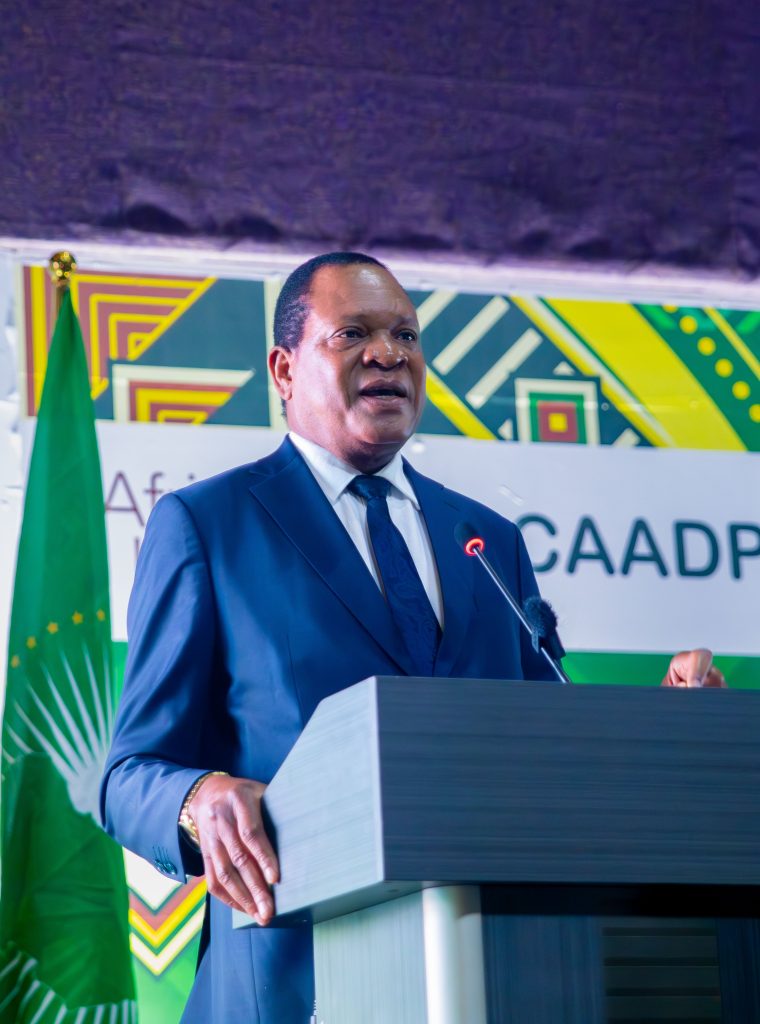
Political leadership and sustained commitment at the highest level are critical to creating the conditions for agricultural transformation, Zimbabwe’s Minister of Agriculture, Mechanisation and Water Resources Development, Dr. Anxious Jongwe Masuka, told the 22nd Comprehensive Africa Agriculture Development Programme (CAADP) Partnership Platform.
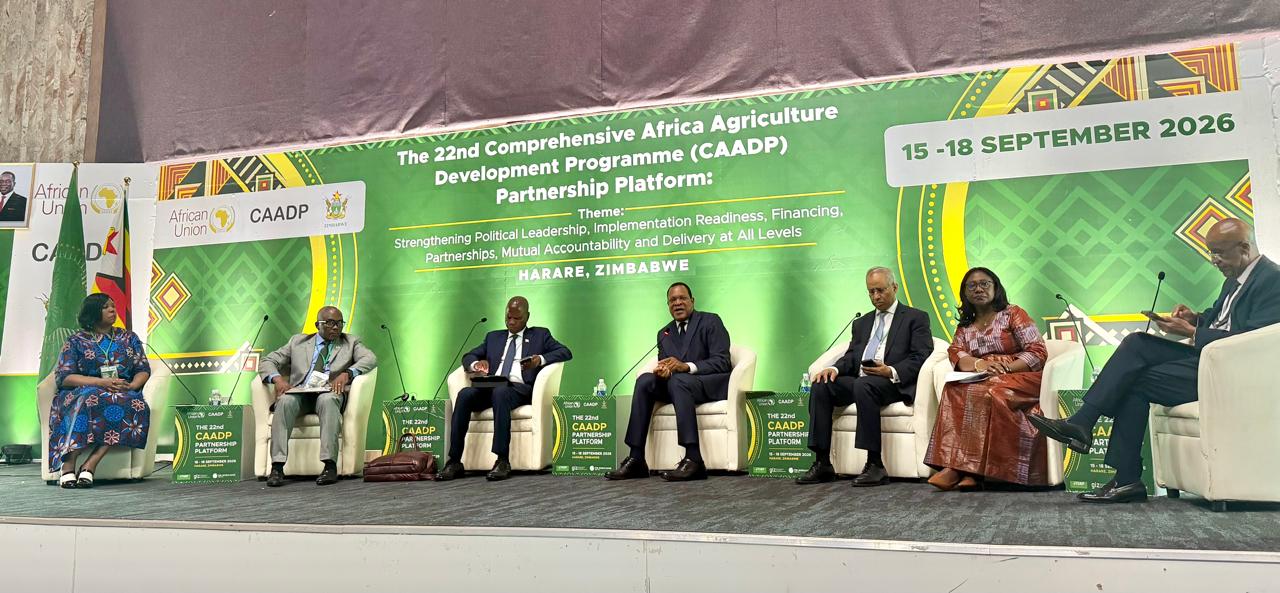
Speaking during the opening panel discussion on “Political Direction and CAADP Strategy,” Dr. Masuka highlighted Zimbabwe’s experience as an illustration of how political leadership can help shift agricultural performance and create an enabling environment for investment.
He pointed to the example of the country’s President, whose personal engagement in agriculture, including investment in irrigation, has provided a visible demonstration of the importance of political commitment to agricultural productivity.
According to the Minister, the President’s farm has expanded from approximately 10 hectares under irrigation two decades ago to 700 hectares, while achieving wheat yields significantly above the national average. Dr. Masuka said such leadership provides an example that can influence broader government action and encourage stakeholders across the agricultural sector to pursue higher levels of productivity.
The Minister linked this political leadership to Zimbabwe’s significant growth in wheat production. He noted that the country produced approximately 94,000 metric tonnes of wheat in 2018, equivalent to around two months of national supply, but was projected to harvest more than 700,000 metric tonnes in 2026.
He attributed the increase to investments in irrigation, mechanisation and storage, alongside an enabling policy environment designed to bring greater private-sector participation into agricultural production.
Dr. Masuka stressed that political direction must ultimately translate into an environment capable of attracting and mobilising investment. With government resources constrained, he said Zimbabwe has sought to use public investment strategically while creating conditions for the private sector to finance and expand agricultural value chains.
This approach, he explained, reflects Zimbabwe’s developmental-state philosophy, under which government has a dual responsibility: to invest in communities and areas where commercial actors may initially see limited opportunity, while simultaneously developing the infrastructure and enabling conditions that allow private investment to follow.
“The state must be an active investor in addition to creating this environment,” the Minister said, emphasising that both direct public investment and an enabling regulatory and investment framework are necessary to unlock agricultural potential.
The Zimbabwean experience therefore placed political ownership, demonstrable leadership and strategic public investment at the heart of the wider CAADP discussion on implementation readiness and agricultural transformation.
The intervention also set the stage for subsequent discussion on the role of financing, private-sector participation and integrated agricultural value chains in translating political commitments into measurable outcomes across Africa.
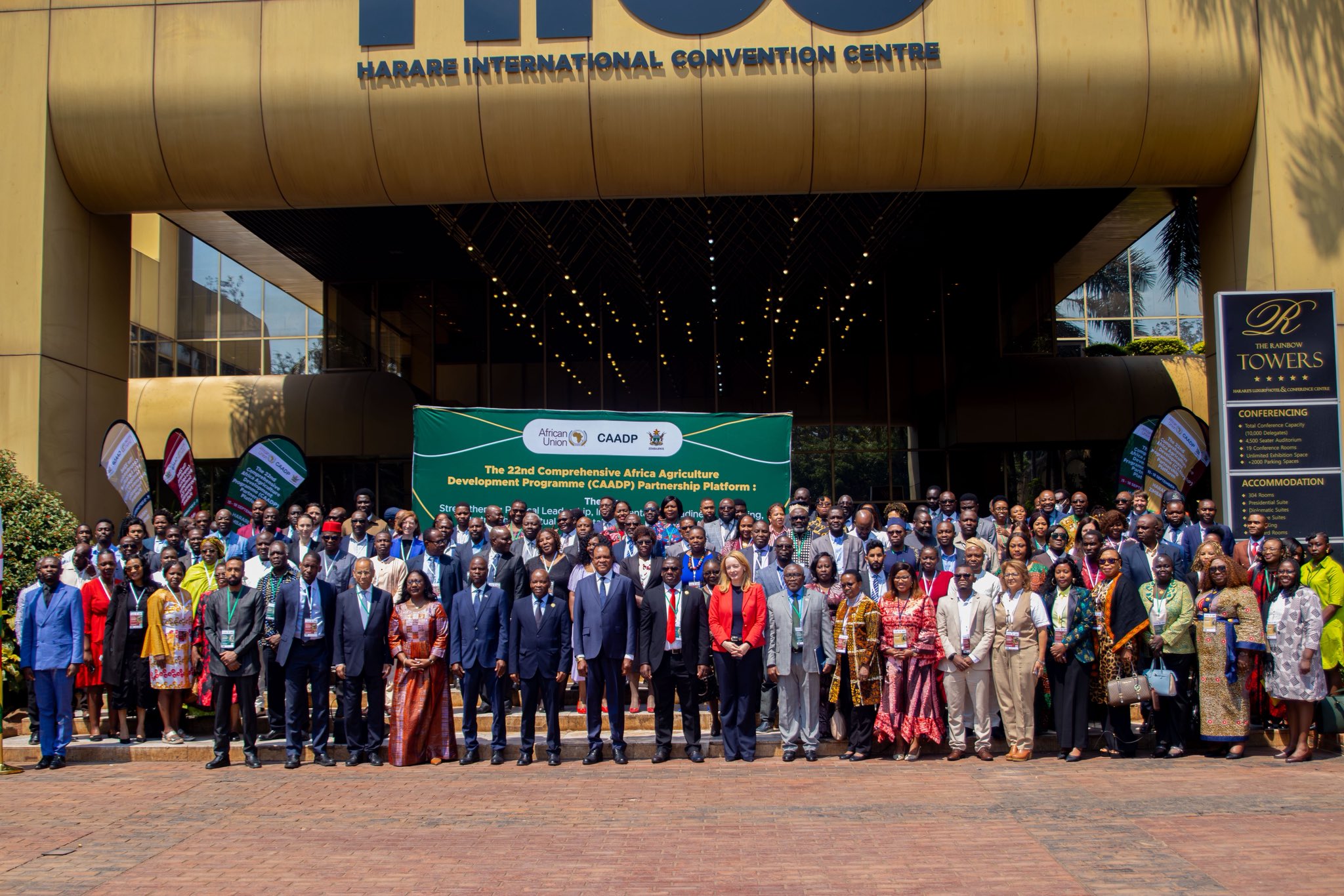
Convened by the African Union Commission (AUC) with Member States, regional economic communities, technical institutions and development partners. The four-day Platform links political direction, country and regional readiness, implementation delivery labs, investment alignment and mutual accountability. This year’s meeting is being hosted by Zimbabwe, with the conference taking place at Rainbow Towers Hotel and Conference Centre in Harare from 15-18 September 2026.