CAADP 2026–2035: Commissioner Vilakati Calls for Greater Agricultural Productivity, Food Security and Continental Self-Reliance
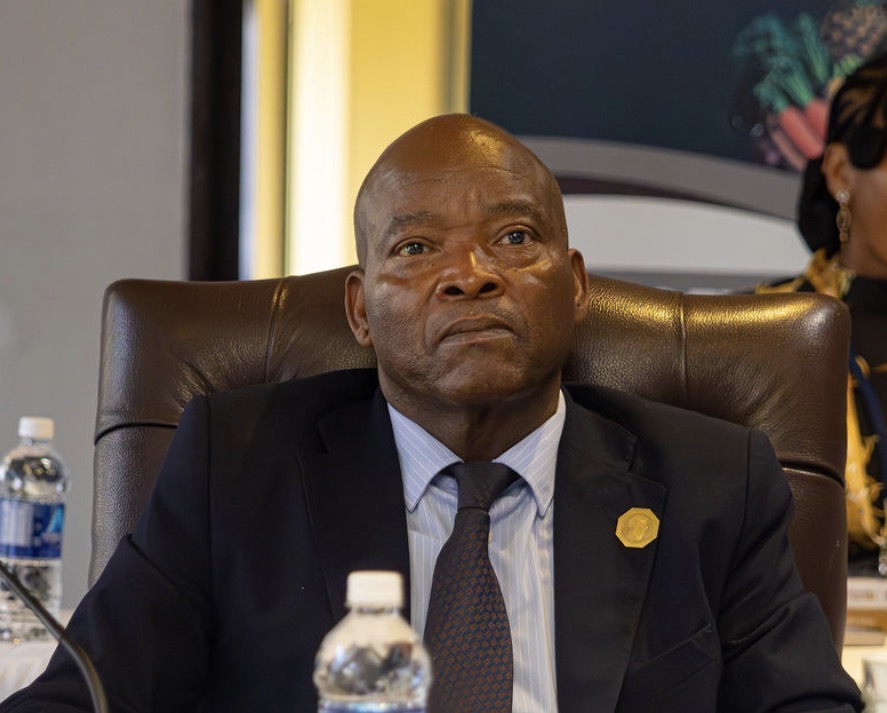
Commissioner Moses Vilakati.
The Head of the African Union Agriculture, Rural Development, Blue Economy and Sustainable Environment (AU-ARBE) department, His Excellency Commissioner Moses Vilakati, has called for a decisive shift from policy commitments and recurring continental deliberations towards measurable implementation, increased agricultural productivity and stronger food self-reliance across Africa.
Speaking to the press at the opening of the 22nd CAADP Partnership Platform, Commissioner Vilakati said the implementation gap remained one of the central challenges confronting the Comprehensive Africa Agriculture Development Programme (CAADP), as Member States continue to convene around ambitious agricultural commitments without sufficiently translating them into visible outcomes on the ground.
He said the CAADP 2026–2035 framework provides an opportunity to change this trajectory by placing production, productivity and implementation at the centre of Africa’s agricultural transformation agenda.
“What has been missing in this CAADP game has been the issue of implementation,” Commissioner Vilakati said, noting that the continent has seen Member States participate in numerous meetings and processes while the resulting impact has not always been sufficiently visible to communities.
Driving African food production and self-reliance
Commissioner Vilakati highlighted the renewed emphasis on increasing Africa’s agricultural production and productivity, noting that the continent continues to face significant gaps in its capacity to produce sufficient food for its growing population.
He pointed to the CAADP ambition of increasing the share of agri-food requirements met through African production, with a target of 45 per cent by 2035, as an important signal of the continent’s drive towards greater food self-reliance.
In this context, he welcomed Zimbabwe’s progress in achieving greater wheat self-sufficiency, describing it as an example of the type of country-level transformation that could contribute to broader continental food security.
He stressed, however, that wheat should be only one component of a wider production strategy.
“We wanted to be self-reliant on other enterprises, and that is the message that we want to send to each Member State,” he said.
The Commissioner identified wheat, rice, maize and edible oils, alongside crops such as cassava and fruits, as strategic agricultural enterprises requiring greater attention under efforts to strengthen domestic production and reduce Africa’s dependence on food imports.
Soil mapping as a foundation for higher productivity
Commissioner Vilakati also outlined the importance of evidence-based agricultural input management, particularly through improved understanding of Africa’s diverse soil conditions.
He explained that his 100-day rolling plan had begun with a focus on soil, arguing that agricultural productivity could not be sustainably increased without understanding the specific characteristics and requirements of different soils.
“When you know what the soil can grow, what type and how much fertiliser you can apply, then the productivity and the production will increase,” he said.
He cautioned against applying uniform fertiliser approaches across geographically and agronomically diverse areas, particularly within input subsidy programmes.
The continental soil-mapping initiative is therefore being extended to Member State level, with the objective of generating more granular information on soil conditions and determining the appropriate agricultural inputs for different regions.
The approach is also intended to strengthen monitoring of agricultural outcomes by establishing clearer links between the application of new fertiliser programmes and changes in production and productivity.
Reducing post-harvest losses
Beyond increasing production, Commissioner Vilakati stressed the need to ensure that more of what African farmers produce reaches consumers and markets.
He highlighted post-harvest losses as a significant constraint, noting that some countries lose between 30 and 40 per cent of agricultural output after production.
Reducing these losses, he indicated, must therefore form part of the continent’s broader agricultural transformation agenda, alongside increased production, improved productivity and stronger agro-processing capacity.
In this regard, he called for Zimbabwe’s Harare processing programme to generate impact extending beyond national borders and contribute to agricultural transformation across the continent.
“We are saying this Harare processing programme today must realise impact, not only to Zimbabwe, but to the whole of Africa,” he said.
From Malabo commitments to implementation
Responding to a question on whether Africa was moving beyond commitments made under the 2014 Malabo Declaration, Commissioner Vilakati acknowledged that significant progress had been made since the declaration, while noting that the continent had not yet reached the level of transformation envisaged.
Drawing on his own experience as a participant in the 2014 process, he recalled that hunger, malnutrition and low agricultural productivity were more pronounced at the time.
While acknowledging improvements, he argued that the pace and scale of progress must now be accelerated.
The pathway, he said, lies in increasing production and productivity within Member States and concentrating implementation efforts on strategic food and agricultural value chains.
“If we do that, within 10 years, I can bet we are going to change the world,” Commissioner Vilakati said.
His remarks placed implementation at the centre of the CAADP 2025–2035 agenda, with the emphasis shifting from the articulation of continental commitments towards practical interventions capable of increasing production, reducing losses, strengthening food self-reliance and delivering measurable improvements in agricultural outcomes.
The 22nd CAADP Partnership Platform therefore provides an important forum for translating these priorities into coordinated action among Member States, regional institutions, development partners, the private sector and other stakeholders across Africa.
MORE: 22nd CAADP Partnership Platform Commissioner Moses Vilakati Opening Remarks [PDF]